As a Leicester SEO consultant, keyword research tools are a basic part of our toolkit, especially when onboarding new clients. I’ve pulled this report together to give small marketing teams or up and coming SEO professionals a useful resource.
Quick Verdict: The Best Keyword Research Tools by Use Case
Best all-round keyword research tool for SMEs
Ahrefs is the standout all-rounder for anyone serious about SEO. Its enormous keyword database provides deep insights, while the ‘Keywords Explorer’ tool offers more than just search volume, including useful metrics like ‘clicks’, keyword difficulty, and ‘Parent Topic’ to help structure content logically.
Also, the ‘Keyword Gap’ analysis is a game-changer, allowing you to instantly discover keywords your competitors rank for that you don’t. While premium-priced at around £79 per month, the depth of data often justifies the investment for businesses committed to growth.
Best keyword research tool for content-led SEO
AnswerThePublic excels at uncovering the questions, prepositions, and comparisons people are actively searching for around your core topics.
Instead of focusing solely on individual keywords, it helps you understand what real people want to know, making it invaluable for building comprehensive content outlines, FAQ pages, and blog posts that truly address user intent.
The visualisation tools and question clustering make it particularly effective for content creators and marketing managers planning editorial calendars.
Best tool for competitor keyword analysis
SpyFu is a competitor-first intelligence platform that excels at reverse-engineering your rivals’ strategies. Its core strength is uncovering every keyword your competitors have ever bid on in Google Ads and every keyword they’ve ranked for organically.
The ‘PPC Ad History’ feature is pretty special, showing every ad variation a competitor has tested over the past 16+ years. For SMEs and marketing managers focused on PPC and competitor analysis, SpyFu provides generous usage limits without the high cost of enterprise-level suites.
Best budget keyword research tool
Google Ads Keyword Planner stands out as the essential free tool, offering first-party data directly from Google that provides a reliable baseline for search volume, trends, and cost-per-click estimates. For new or smaller businesses, it delivers highly localised search volume forecasts for specific geographies, allowing you to gauge demand with data straight from the source.
While designed for PPC campaigns, its insights are invaluable for SEO as a starting point before diving into more complex tools. It’s important to note, however, that if you aren’t currently using the platform to advertise or you’re not spending enough, its only going to give you rough search volume stats e.g. 1-100 average monthly searches. This makes it a little more rough around the edges compared to many featured in this article.
How We Evaluate Keyword Research Tools
Accuracy vs direction: what actually matters in practice
No keyword tool offers perfectly accurate search volumes—they all provide estimates based on different methodologies and data sources. What matters more than absolute precision is directional accuracy: understanding which keywords have more volume than others, spotting trends over time, and identifying realistic opportunities for your business. We evaluate tools based on whether their data helps you make better decisions, not whether their numbers match Google’s actual search volumes to the decimal point. For UK businesses, we particularly value tools that provide reliable local data and UK-specific SERP insights rather than just US-focused metrics.
Why most tools look better in demos than real SEO work
Many keyword tools excel at showcasing impressive databases and sleek interfaces during demos, but the real test comes during daily SEO work. We assess tools based on practical workflows: how quickly can you go from initial research to actionable content ideas? Does the interface slow you down with unnecessary complexity? Are the ‘advanced features’ genuinely useful or just marketing fodder? For SMEs especially, we prioritise tools that deliver value in real-world scenarios—finding local opportunities, understanding competitor strategies, and planning content—rather than those that simply boast the largest keyword counts.
What SMEs should prioritise (and ignore) when choosing tools
SMEs should prioritise local relevance, ease of use, and actionable insights over sheer database size. Focus on tools that offer strong UK SERP coverage, local keyword tracking, and competitor analysis relevant to your market. Look for clear data visualisation that helps you make quick decisions. What you can safely ignore: massive keyword databases that include millions of irrelevant international terms, overly complex enterprise features designed for large agencies, and tools that require extensive training to extract basic value. The best tool for an SME is one that becomes part of your regular workflow, not one that sits unused because it’s too complicated or expensive.
Finding the right customers online starts with understanding what they search for. For a small business in Leicester or the wider Midlands, this means getting to grips with keyword research. It is the foundation of effective Search Engine Optimisation (SEO) and Pay-Per-Click (PPC) campaigns, helping you appear when potential customers need you most. But with so many options available, choosing the right platform can be a challenge.
This guide is designed to help. We have analysed 12 of the best keyword research tools available, focusing specifically on what matters to small and medium-sized enterprises (SMEs). We provide a straightforward assessment of each tool’s strengths and weaknesses to help you make an informed decision. As a local SEO agency with over 20 years of digital marketing experience, we value clear, practical advice.
Inside, you will find:
- Detailed Reviews: Honest breakdowns of top tools like Ahrefs, Semrush, Moz, and Google Keyword Planner.
- Practical Use Cases: Specific guidance for Leicestershire hospitality venues, Midlands-based professional services, and Shopify/WooCommerce e-commerce stores.
- Clear Comparisons: Direct analysis of features, pricing, and who each tool is genuinely best for.
We will explain what each tool does, who it’s designed for, and how it can help you connect with your local audience, using easy-to-understand language. Each review includes screenshots and direct links to get you started quickly. Let’s find the right fit for your business goals and budget.
The Best Keyword Research Tools (In Detail)
1. Ahrefs
Ahrefs is a comprehensive, all-in-one SEO platform widely regarded as one of the best keyword research tools available. Its main strength lies in its enormous and frequently updated keyword database, providing deep insights that are especially valuable for UK businesses. The platform’s ‘Keywords Explorer’ tool is exceptionally powerful, offering more than just search volume; it includes useful metrics like ‘clicks’, keyword difficulty, and even identifies the ‘Parent Topic’ to help you structure your content logically.
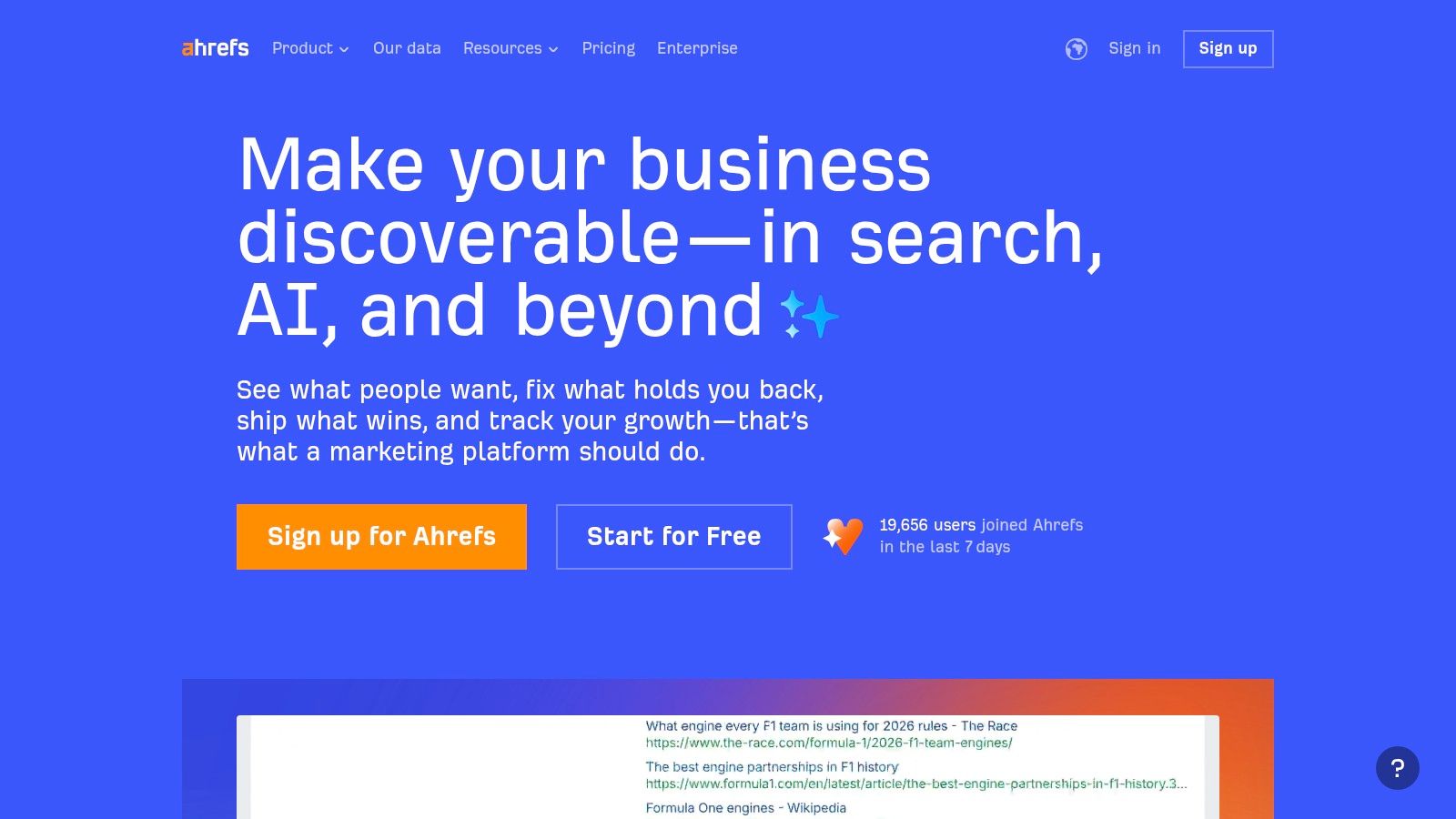
For a Leicester-based business, this means you can accurately analyse the local search landscape, see which keywords your local competitors rank for, and find opportunities they have missed. The SERP (Search Engine Results Page) overview is clean and provides a realistic snapshot of what it takes to rank, helping you prioritise efforts effectively.
Key Features & Considerations
- Best For: SMEs needing in-depth competitor analysis and high-volume keyword research. It’s also excellent for e-commerce businesses on Shopify or WooCommerce, thanks to its Amazon keyword data.
- Standout Feature: The ‘Keyword Gap’ analysis in the ‘Site Explorer’ is a game-changer. It allows you to enter your website and several competitors’ sites to instantly discover valuable keywords they rank for that you don’t.
- UK Focus: Ahrefs offers excellent UK SERP coverage, ensuring the data you see is relevant for targeting customers in the Midlands and beyond.
- Pricing: Ahrefs is a premium tool, with plans starting at around £79 per month. This higher price point can be a barrier for smaller businesses, but the depth of data often justifies the investment for those serious about growth.
Ahrefs provides a powerful, integrated suite where your keyword research directly informs your content strategy, competitor tracking, and technical site audits.
Website: https://ahrefs.com
2. Semrush
Semrush is a powerful all-in-one marketing suite and a strong contender for the best keyword research tool, particularly for businesses integrating SEO with paid advertising (PPC). Its ‘Keyword Magic Tool’ is excellent at uncovering long-tail keyword opportunities and organising them into logical topic clusters, making content planning very efficient. The platform provides a comprehensive view of the marketing landscape, blending organic search data with valuable insights into competitor ad strategies.
For a Midlands-based professional services firm, this means you can not only identify keywords to target in your blog posts but also see what competitors are bidding on in Google Ads. This integrated approach allows for a smarter, more cost-effective marketing strategy, ensuring your organic and paid efforts work together. The platform’s reporting capabilities are robust, ideal for tracking performance across different locations and devices.
Key Features & Considerations
- Best For: Marketing teams and agencies needing a unified toolkit for SEO, PPC, and content marketing. Its reporting features are excellent for demonstrating return on investment.
- Standout Feature: The ‘Keyword Magic Tool’ is useful for discovering question-based keywords and long-tail variations, with advanced filters for intent, difficulty, and SERP features.
- UK Focus: Semrush offers strong local keyword tracking, allowing you to monitor your rankings specifically for Leicester or other UK cities, which is vital for local service-based businesses.
- Pricing: Plans begin at approximately $129.95 per month (around £105). While a significant investment, its broad functionality across SEO, content, and PPC offers excellent value for businesses managing multiple marketing channels.
Semrush is more than just a keyword tool; it’s a complete digital marketing intelligence platform that helps you understand your entire online presence. Some of its features are even available in our guide to free SEO audit tools.
Website: https://www.semrush.com
3. Moz (Moz Pro + Keyword Explorer)
Moz is a highly respected name in the SEO industry, and its Moz Pro suite offers a great entry point into professional-grade SEO tools. Its Keyword Explorer is particularly well-regarded for its user-friendly interface and unique metrics like ‘Organic CTR’ and ‘Priority’, which help you assess not just search volume but the real-world traffic potential of a keyword. This makes it one of the best keyword research tools for business owners just starting to get serious about their digital strategy.

For a small business in Leicestershire, Moz simplifies the process of finding relevant local search terms. The platform bundles rank tracking and site crawl features, allowing you to monitor your performance and fix technical issues without needing multiple subscriptions. Its clear data visualisation helps you understand complex concepts, and if you’re new to the terminology, our SEO glossary can help you get up to speed.
Key Features & Considerations
- Best For: Small teams, startups, and marketing managers who need a powerful, all-in-one tool without the steep learning curve of more complex platforms.
- Standout Feature: The ‘Priority Score’ combines search volume, difficulty, and organic click-through rate into a single, actionable metric. This helps you quickly identify the keywords that offer the best balance of opportunity and potential traffic.
- UK Focus: Moz provides reliable UK keyword data and SERP analysis, which is perfectly adequate for local businesses targeting customers within the Midlands.
- Pricing: Moz Pro plans start from around $99 per month (approx. £78). While its database isn’t quite as vast as Ahrefs or Semrush, its integrated approach and excellent educational resources offer great value for growing businesses.
4. Google Keyword Planner
As the original source for search data, Google Keyword Planner is an essential tool. It is Google’s own platform within Google Ads, offering first-party data that provides a reliable baseline for search volume, trends, and cost-per-click estimates. While designed for PPC campaigns, its insights are invaluable for SEO, helping to validate keyword ideas and understand search seasonality directly from the source.
For a Leicester-based services firm, this means you can get highly localised search volume forecasts for specific UK regions and cities. This allows you to gauge demand for terms like “solicitors in Leicestershire” or “accountants in the Midlands” with data straight from Google. It’s an excellent starting point before diving into more complex tools.
Key Features & Considerations
- Best For: New businesses and SMEs needing a free, reliable starting point for keyword research, especially for validating PPC campaign ideas and local SEO.
- Standout Feature: Its direct integration with Google Ads makes it indispensable for forecasting ad spend and potential traffic. You can get suggested bid ranges and budget recommendations based on your target keywords.
- UK Focus: The ability to drill down to specific cities and regions in the UK is excellent for local businesses wanting to understand their immediate market without paying for a premium tool.
- Pricing: The tool is free to use with a Google account. However, to see precise search volume data instead of broad ranges (e.g., 1K-10K), you typically need to have an active Google Ads campaign with some level of spend.
While it lacks the deep competitor analysis of paid suites, it pairs perfectly with other free tools. For example, you can identify performance keywords using our guide on Google Search Console and then use Keyword Planner to find related terms.
Website: https://ads.google.com/home/tools/keyword-planner
5. Ubersuggest (by NP Digital)
Ubersuggest is a popular, lightweight SEO tool that offers an approachable entry point into keyword research. Its strength lies in its simplicity and user-friendly interface, making it one of the best keyword research tools for small business owners or marketing managers who are new to SEO. The platform provides essential data like search volume, keyword difficulty, and cost-per-click, presenting it in a clear, easy-to-digest format.
For a Leicester-based service business, Ubersuggest can quickly generate content ideas and reveal what keywords local competitors are ranking for without a steep learning curve. While its database isn’t as vast as premium suites, it provides enough actionable insight to get a foundational SEO strategy off the ground, helping you identify relevant keywords to target customers in the Midlands.
Key Features & Considerations
- Best For: Solopreneurs, bloggers, and small SMEs needing a straightforward and affordable tool for initial keyword and content idea generation.
- Standout Feature: The lifetime payment plan is a unique offering in the market. For a one-time fee, users can gain long-term access, which can be highly cost-effective for businesses with light, consistent SEO needs.
- UK Focus: Ubersuggest allows you to specify the UK as your target location, ensuring the keyword volume and SERP data are relevant for your local audience.
- Pricing: Ubersuggest is significantly more affordable than its high-end competitors, with plans starting from around £29 per month. The main draw for many is the non-recurring lifetime deal, but be aware it is non-refundable once purchased.
Ubersuggest is an excellent starting point, effectively bridging the gap between free tools and expensive enterprise-level platforms.
Website: https://neilpatel.com/ubersuggest
6. Mangools (KWFinder)
Mangools presents an incredibly intuitive and user-friendly suite of SEO tools, with KWFinder being its flagship product. It’s designed to simplify the process of finding valuable keywords, making it one of the best keyword research tools for those who find more complex platforms overwhelming. Its strength lies in identifying long-tail keywords with low SEO difficulty, offering a clear path to ranking for niche topics. The interface is clean, colour-coded, and presents data in a highly digestible format.
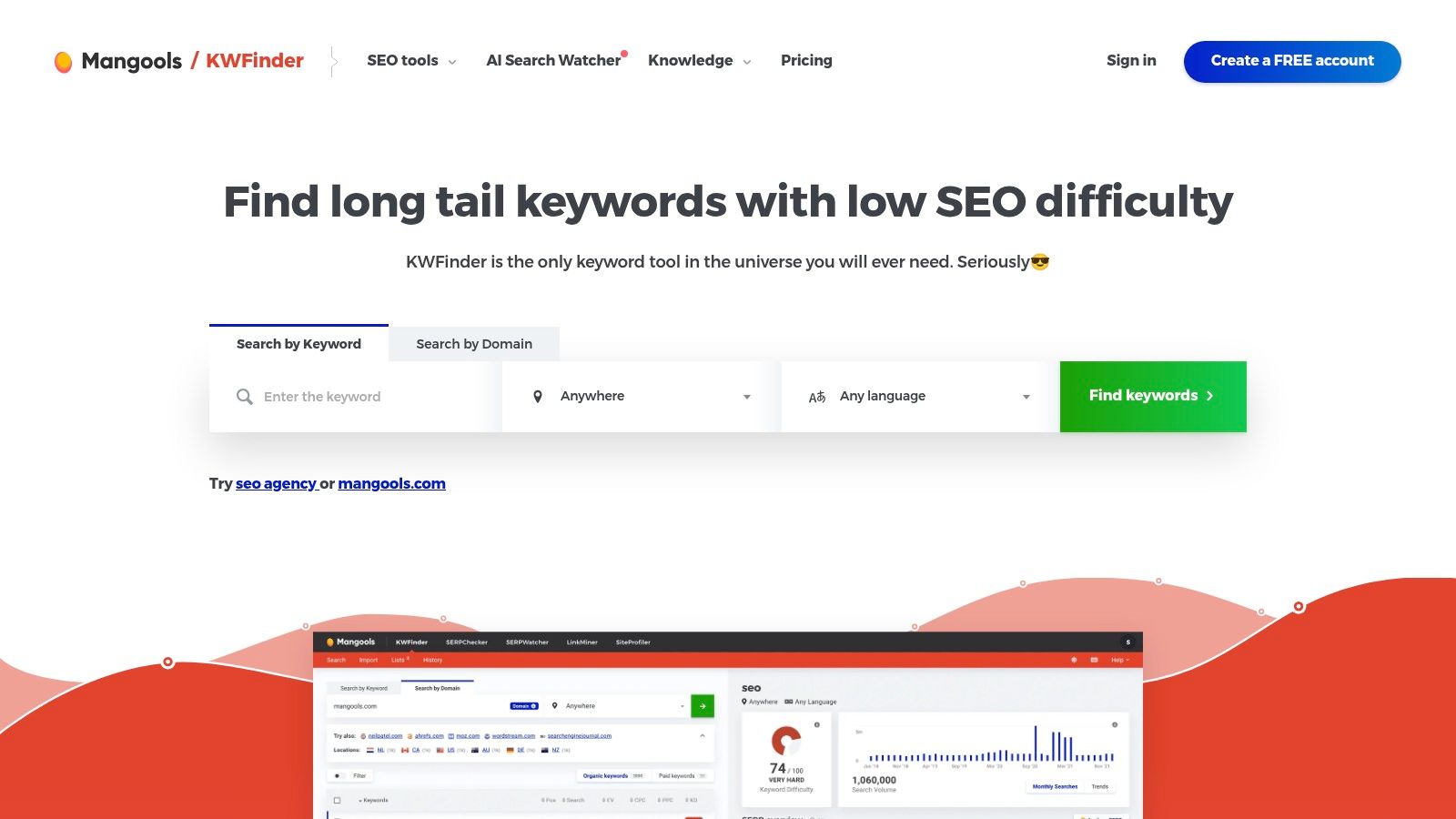
For a local Leicestershire service business, KWFinder makes it simple to filter by location and uncover specific, long-tail phrases your customers are actually using. The SERP preview is built directly into the keyword analysis, giving you an immediate, realistic look at the top-ranking pages without needing to open a new tab, helping you quickly gauge the competition.
Key Features & Considerations
- Best For: Small businesses, freelancers, and marketing managers who need an easy-to-use tool for finding achievable, low-competition keywords without a steep learning curve.
- Standout Feature: KWFinder’s keyword difficulty score is famously accurate and tailored to the strength of the actual sites on page one. It provides a clear, actionable metric that helps you prioritise keywords you can realistically rank for.
- UK Focus: The tool allows for precise location-based research, enabling you to target keywords specifically for the UK, East Midlands, or even down to the city level for hyper-local campaigns.
- Pricing: Mangools offers excellent value, with plans starting from around £25 per month. The main limitation is the daily lookup caps on lower-tier plans, though the tools are only sold as a complete bundle.
Mangools is the ideal entry point into professional SEO, providing the essential data you need in a package that encourages action rather than indecision.
Website: https://mangools.com/kwfinder
7. SE Ranking
SE Ranking is a versatile, all-in-one SEO platform that offers a powerful suite of tools at an extremely competitive price point. It positions itself as a strong alternative to the premium players, providing robust keyword research, rank tracking, competitor analysis, and site auditing capabilities. For many UK businesses, it hits the sweet spot between affordability and functionality, making it one of the best keyword research tools for growing teams. The platform’s keyword research tool provides essential metrics like difficulty, search volume, and CPC, alongside useful suggestions and SERP analysis.
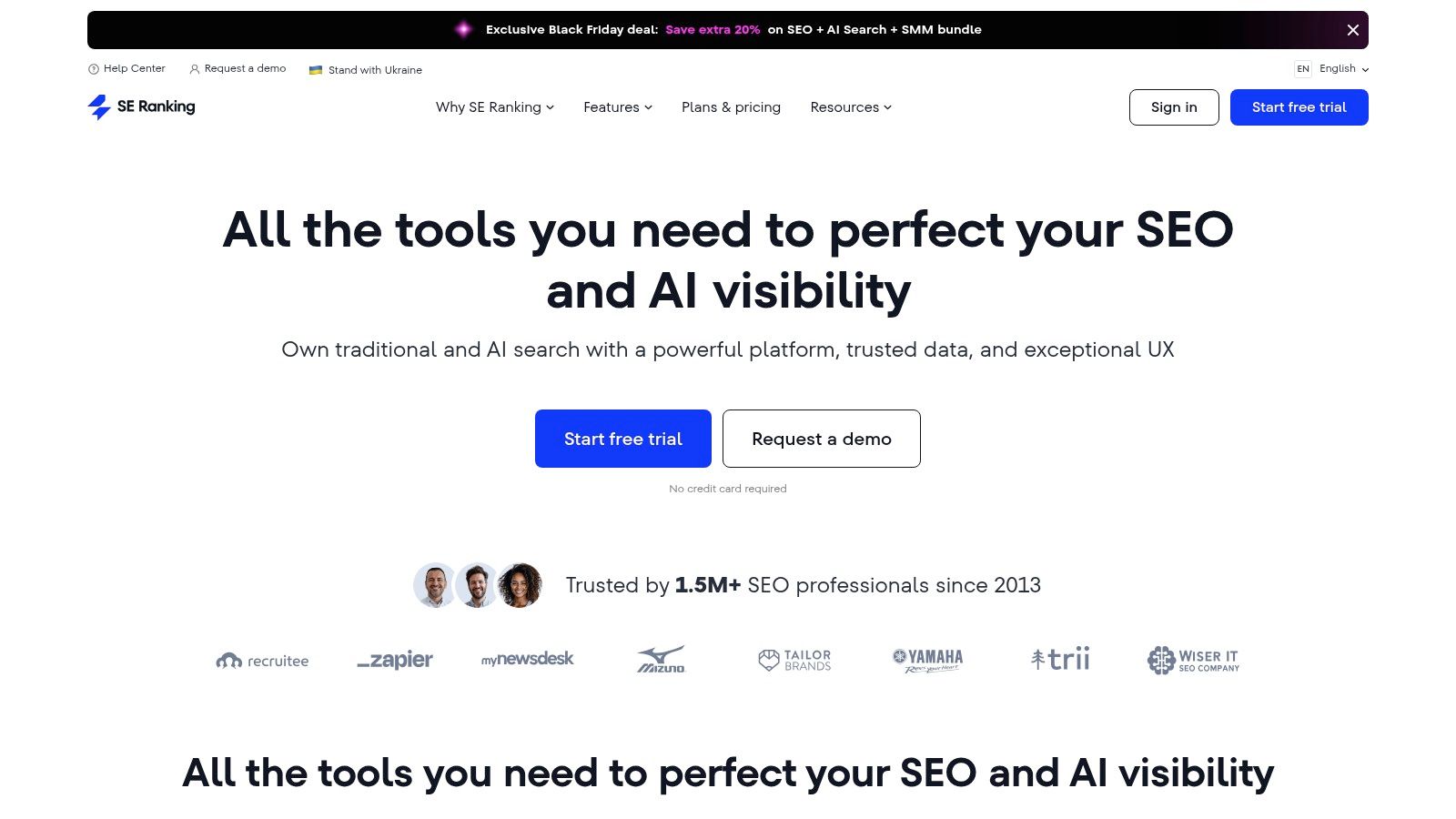
For a professional services firm in Leicestershire, SE Ranking’s local rank tracking and competitor analysis features are particularly valuable. You can monitor your visibility in specific postcodes and analyse what local rivals are doing to attract clients, all without the significant financial commitment required by other platforms.
Key Features & Considerations
- Best For: SMEs, agencies, and marketing teams needing a comprehensive SEO toolkit without a premium price tag. Its flexible plans are ideal for businesses that are scaling up.
- Standout Feature: The platform’s ‘Share of Voice’ metric in the rank tracker is excellent. It goes beyond simple position tracking to show your actual market visibility against competitors, providing a much clearer picture of your organic performance.
- UK Focus: SE Ranking provides reliable UK data for both national and local keyword research, allowing you to accurately track rankings and discover opportunities across the Midlands.
- Pricing: Its pricing model is highly flexible and attractive, with plans starting from around £44 per month. This affordability, combined with the depth of features, offers an exceptional price-to-performance ratio.
SE Ranking delivers a user-friendly and data-rich environment, making it a brilliant choice for businesses that need a complete SEO solution that grows with them.
Website: https://seranking.com
8. SpyFu
SpyFu is a competitor-first intelligence platform, making it one of the best keyword research tools for businesses wanting to reverse-engineer their rivals’ strategies. Its core strength is uncovering the complete history of a domain’s paid and organic keywords, showing you exactly where your competitors have found success and what they’ve tested in their Google Ads campaigns over many years. This is invaluable for understanding the market landscape before you invest your own budget.
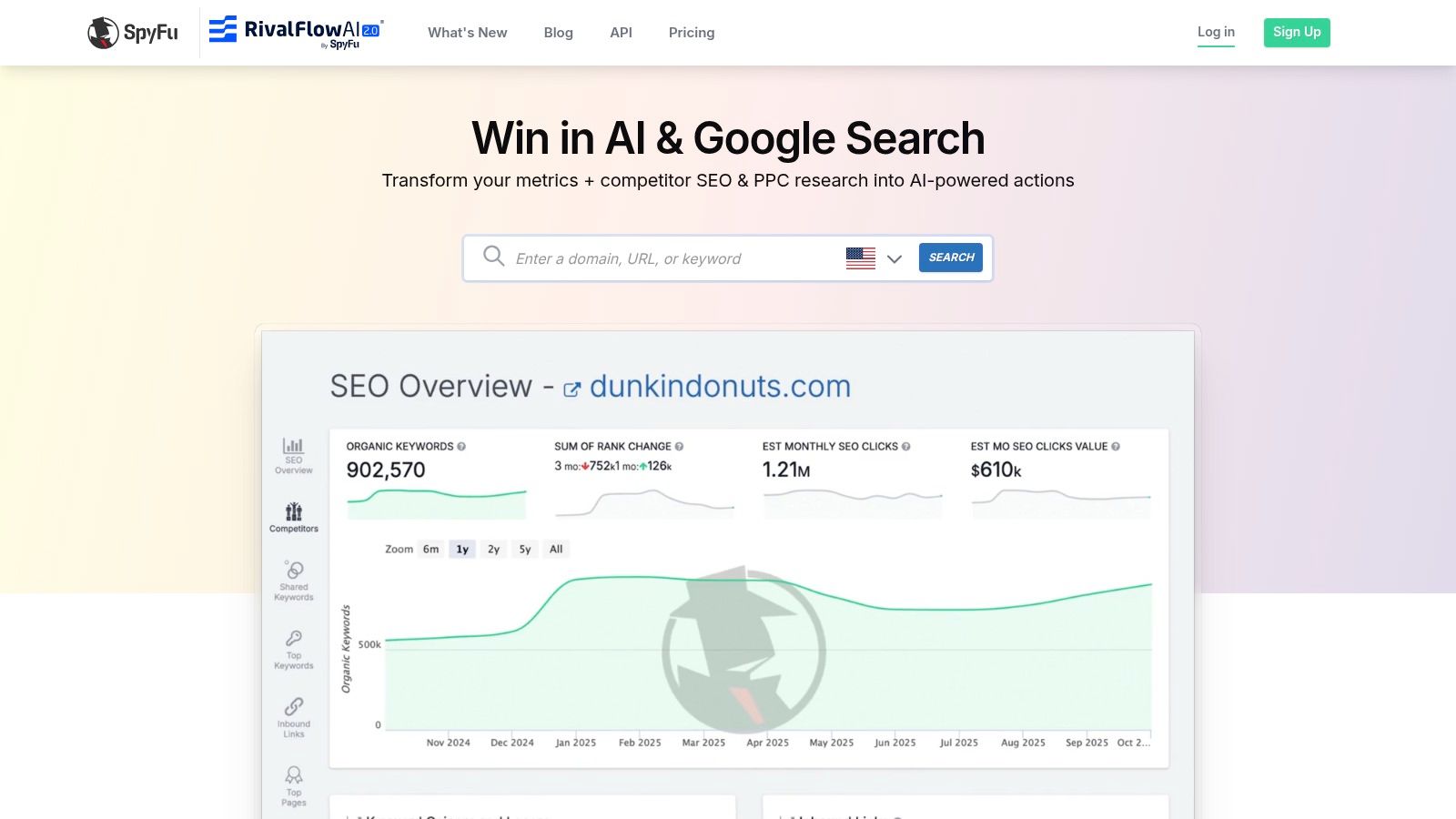
For a professional services firm in Leicestershire, this means you can identify the most profitable keywords your local competition is bidding on and find organic keyword gaps. The platform’s focus on PPC history provides a unique angle, helping you build a more robust and informed marketing strategy that integrates both SEO and paid search efforts from day one.
Key Features & Considerations
- Best For: SMEs and marketing managers focused on PPC and competitor analysis who want generous usage limits without the high cost of enterprise-level suites.
- Standout Feature: The “PPC Ad History” is exceptional. It allows you to see every Google Ad a competitor has run, providing years of insight into their ad copy, keyword targeting, and campaign evolution.
- UK Focus: SpyFu offers strong data coverage for both the UK and US, ensuring the competitor insights you gather are highly relevant for your target audience in the Midlands.
- Pricing: SpyFu offers excellent value, with plans starting from around $39 per month. Paid tiers provide “unlimited” searches and data exports, making it a cost-effective choice for heavy research.
SpyFu empowers you to learn from your competitors’ successes and failures, giving you a strategic advantage in a crowded market.
Website: https://www.spyfu.com
9. AnswerThePublic
AnswerThePublic is a unique search-listening tool that excels at uncovering the questions, prepositions, and comparisons people are actively searching for around your core topics. Instead of focusing on raw search volume, it visualises Google’s autosuggest data, presenting long-tail keyword opportunities in easy-to-understand clusters. This makes it one of the best keyword research tools for rapid content ideation and understanding user intent.
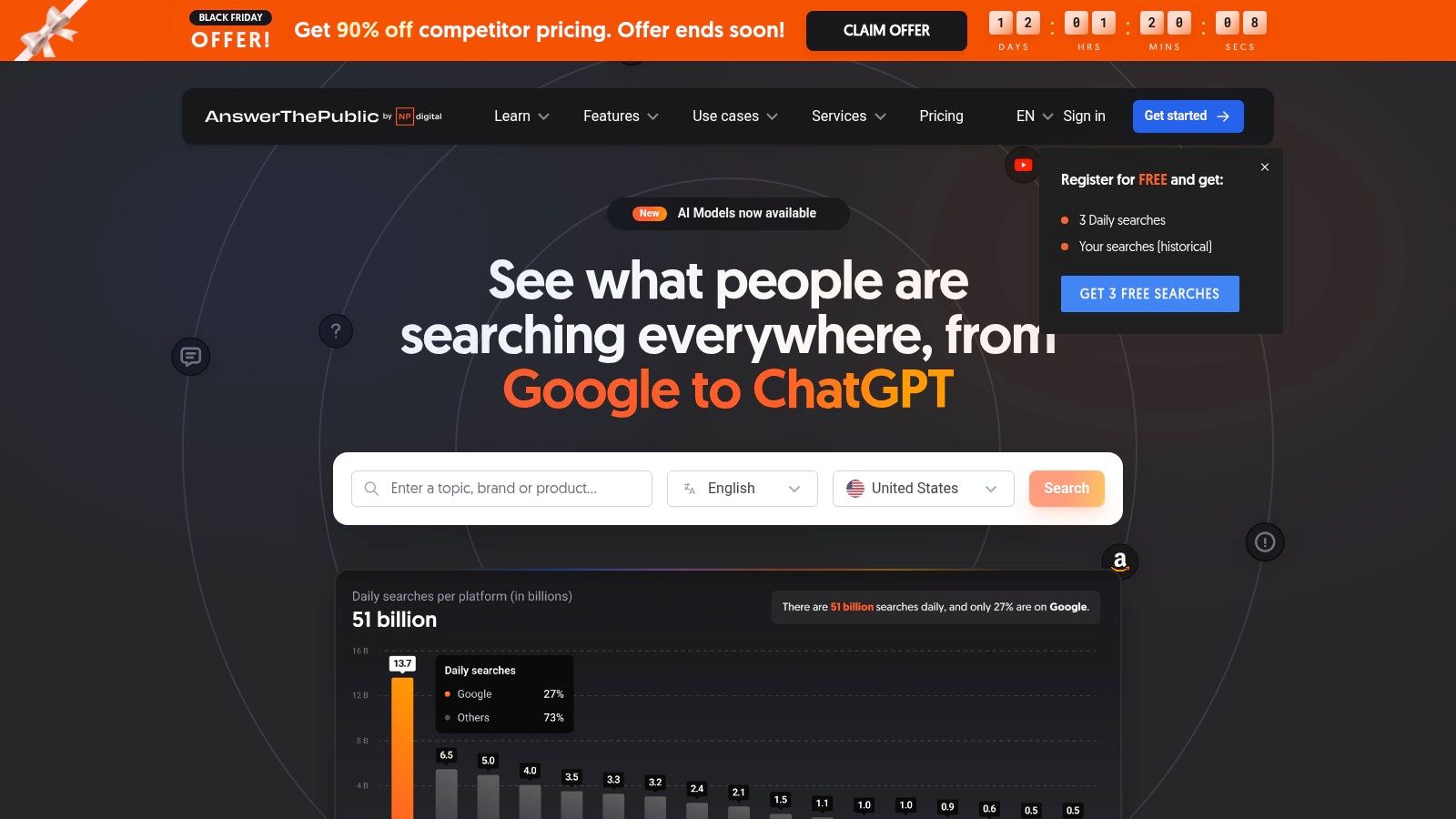
For a professional services firm in Leicestershire, this means you can quickly generate a list of blog post titles, FAQ sections, or service page content that directly addresses your audience’s specific queries. The visual outputs are brilliant for brainstorming sessions and creating content briefs that are laser-focused on customer pain points, helping you build authority and trust.
Key Features & Considerations
- Best For: Content creators, copywriters, and marketing managers needing to quickly generate topic ideas and build comprehensive content outlines for blogs or FAQ pages.
- Standout Feature: The visualisations are its core strength. It organises search queries into intuitive wheels based on question types (who, what, where, why, etc.), which is incredibly helpful for structuring content logically around user intent.
- UK Focus: The tool is fully localised for the UK, ensuring the autosuggest data you see is directly relevant to a British audience, from the Midlands to London.
- Pricing: A free plan is available but is limited to a few searches per day. Paid plans start from around £40 per month, unlocking unlimited searches, historical data comparisons, and team collaboration features.
AnswerThePublic is less about deep metrics and more about human-centric insight, making it an excellent starting point for any content strategy.
Website: https://answerthepublic.com
10. KeywordTool.io
KeywordTool.io is a specialised long-tail keyword generator that excels at finding opportunities beyond standard Google search. Its strength lies in pulling keyword ideas directly from the autocomplete features of various platforms, including Google, YouTube, Bing, Amazon, and even Instagram. This makes it an incredibly useful tool for uncovering how real users are searching on specific sites, providing a different perspective than traditional SEO suites.
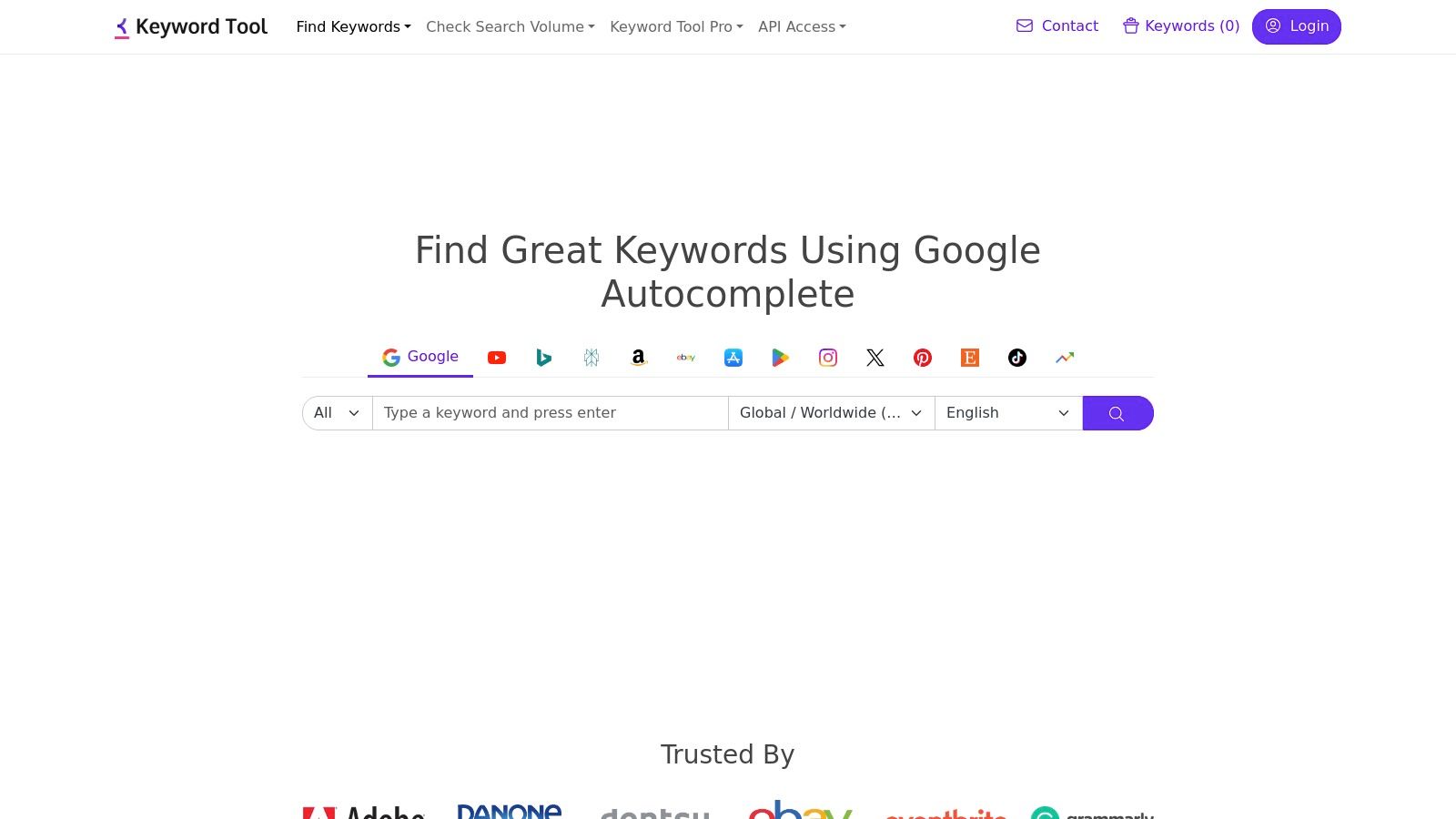
For a Leicester business selling products on Amazon or creating video content for a local audience on YouTube, this tool is invaluable. It helps you understand the specific phrases customers use on those platforms, allowing you to optimise product listings or video titles with precision. The free version is excellent for brainstorming, while the pro version unlocks the critical data needed for strategic decisions.
Key Features & Considerations
- Best For: E-commerce businesses on Shopify or WooCommerce that also sell on marketplaces like Amazon or eBay. It’s also perfect for content creators focusing on YouTube SEO.
- Standout Feature: Its multi-platform support is its biggest differentiator. The ability to switch between Google, YouTube, Amazon, and others in a single interface provides a massive advantage for platform-specific marketing.
- UK Focus: The tool supports Google.co.uk and provides data for 192 countries, ensuring your long-tail keyword research is relevant for targeting customers in the UK.
- Pricing: A free version is available for generating keyword ideas. Pro plans, which unlock search volume, competition, and CPC data, start from around $69 per month, making it a significant investment for unlocking its full potential.
KeywordTool.io is less of an all-in-one SEO platform and more of a laser-focused idea generation tool, helping you find the exact long-tail phrases your customers are typing.
Website: https://keywordtool.io
11. AlsoAsked
AlsoAsked is a unique and insightful tool that visualises the “People Also Ask” (PAA) data directly from Google’s search results. Instead of focusing on search volumes, this UK-founded platform maps out the relationships between questions, helping you understand the entire conversation around a topic. It provides a visual tree of related questions, revealing the journey a potential customer takes when seeking information.
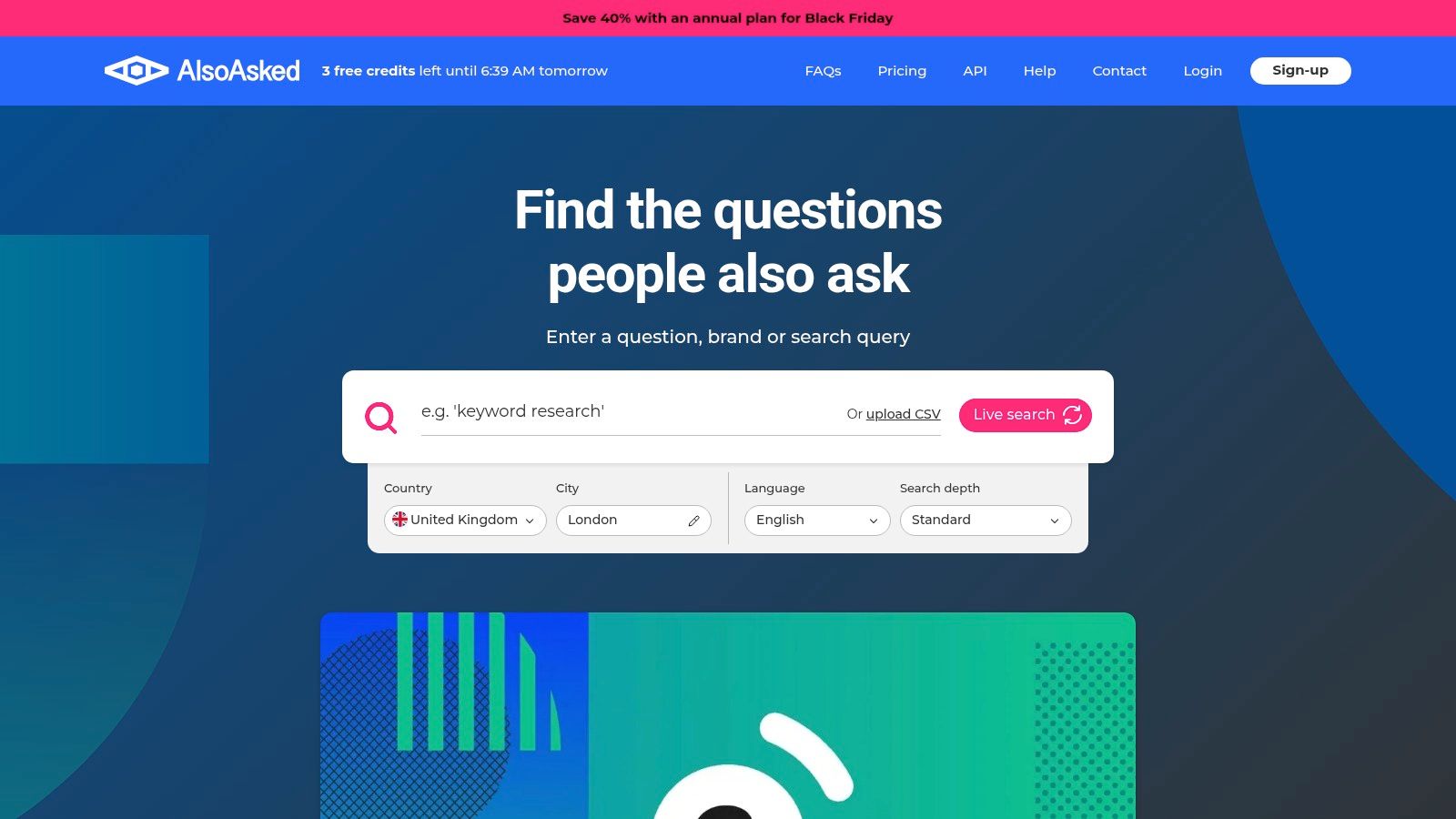
For a Leicester-based service business, this means you can build content that pre-emptively answers every follow-up question a client might have. By mapping these queries, you can create comprehensive blog posts, service pages, and FAQ sections that perfectly match user intent, positioning your business as a local authority. The ability to target down to the city level ensures the question data is highly relevant.
Key Features & Considerations
- Best For: Content marketers and SMEs looking to build topical authority and create comprehensive content outlines or FAQ pages that directly address user questions.
- Standout Feature: The multi-level question mapping is incredibly powerful. You can see how one question branches into several related sub-queries, providing a ready-made structure for your content and ensuring you cover a topic in exhaustive detail.
- UK Focus: As a UK-based tool with excellent local targeting, you can reliably pull question data for specific cities like Leicester, Nottingham, or Derby to inform your local SEO strategy.
- Pricing: AlsoAsked operates on a credit-based system, with a free tier and paid plans starting from $15 per month. Pay-As-You-Go credits are also available, which don’t expire, offering great flexibility for sporadic, intensive research periods without a recurring commitment.
AlsoAsked is one of the best keyword research tools for understanding search intent. It pairs perfectly with a volume-focused tool to ensure your content is both comprehensive and targets valuable search terms.
Website: https://alsoasked.com
12. SISTRIX
SISTRIX is a powerful, Germany-based SEO suite that has earned a strong reputation across the UK and Europe. Its key differentiator is the ‘Visibility Index’, a long-standing metric used by many SEO professionals to benchmark a website’s overall search engine presence over time. The platform offers a robust keyword research tool with extensive historical data, allowing businesses to analyse trends and SERP changes across more than 40 countries, making it one of the best keyword research tools for international campaigns.
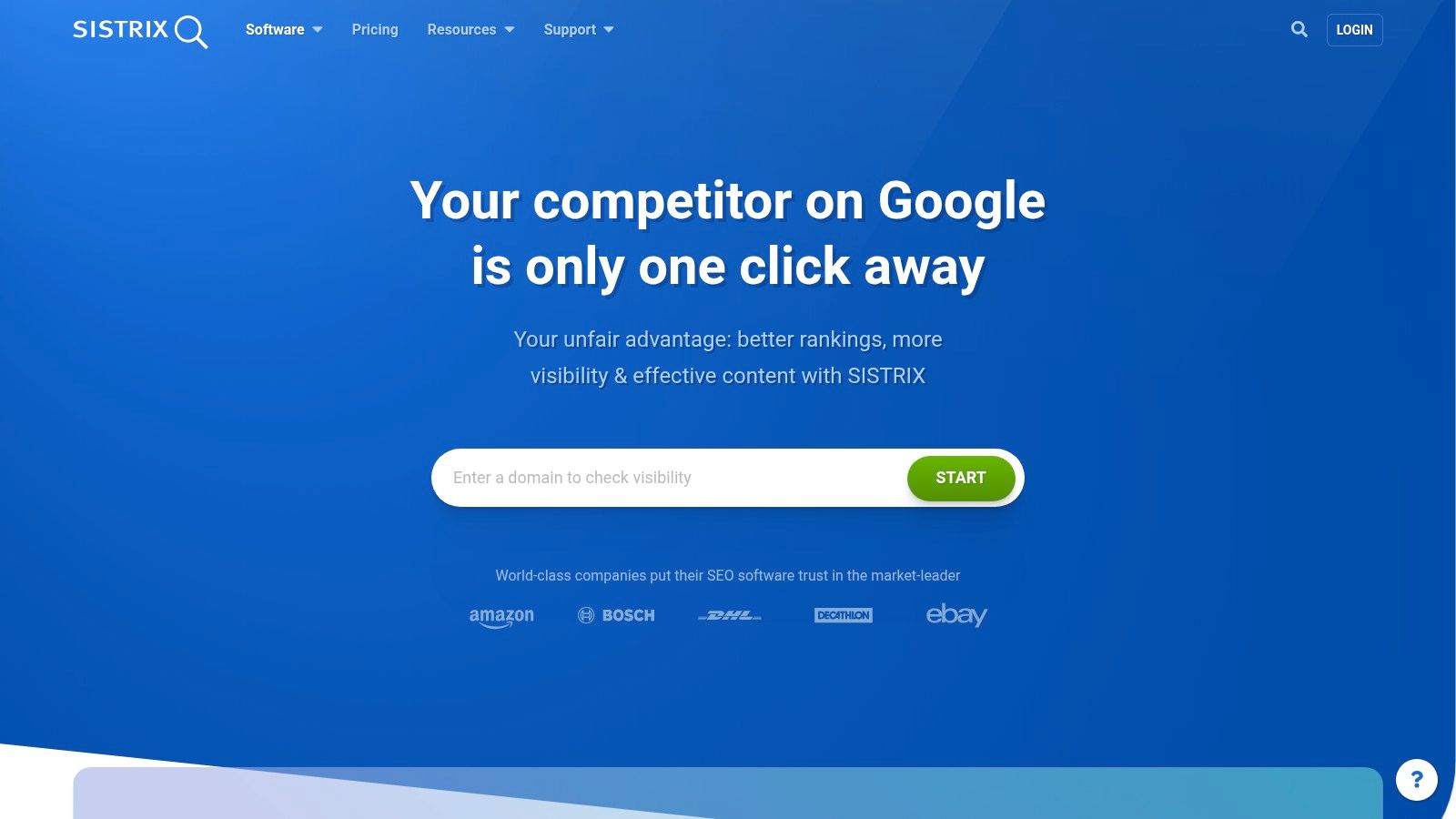
For a Midlands-based company, this means you can track not only your keyword rankings but also your overall market share against competitors with a reliable, standardised score. The interface is data-rich and analyst-focused, providing deep insights into SERP features, competitor movements, and historical keyword performance that other tools might miss.
Key Features & Considerations
- Best For: Businesses operating across the UK and EU, and marketers who appreciate deep, historical data analysis for strategic planning. The free tool is also an excellent starting point for any small business.
- Standout Feature: The Visibility Index is the platform’s signature metric. It provides a single, easy-to-understand score for tracking your (and your competitors’) SEO progress and market visibility over many years.
- UK Focus: With strong UK data coverage, SISTRIX is well-suited for analysing the British market. Its historical SERP data is particularly useful for understanding how the UK search landscape has evolved.
- Pricing: SISTRIX offers modular pricing, allowing you to pay only for the features you need. There is also a generous free version that provides 10 keyword lookups per day, which is very useful for quick research.
SISTRIX provides a data-centric approach to SEO, empowering businesses with the historical context needed to make smarter, forward-looking strategy decisions.
Website: https://sistrix.com
13. Google Autocomplete
Google Autocomplete is the simplest and most accessible keyword research tool available—because it’s built directly into Google’s search box. As you type a query, Google instantly suggests completions based on what real people are searching for right now. This isn’t algorithmic prediction; it’s live data from actual search behaviour, making it one of the most authentic sources of keyword ideas available. The suggestions adapt based on your location, search history, and current trends, providing genuinely relevant local insights.
For a Midlands business, this means you can quickly validate whether people are actually searching for specific services or products in your area. Type ‘accountants in Leicester’ and see what Google suggests next—’near me’, ‘for small business’, ‘affordable’—these modifiers reveal exactly how your potential customers are searching. It’s particularly valuable for uncovering long-tail variations and question-based queries that might not appear in traditional keyword tools.
While Google Autocomplete doesn’t provide search volumes or difficulty scores, it’s unmatched for understanding the natural language your customers use. It’s an essential starting point that complements more sophisticated tools perfectly.
Website: https://www.google.co.uk (just start typing in the search box)
14. Surfer
Surfer is a content optimisation platform that approaches keyword research from a different angle—focusing on what’s already ranking rather than what people are searching for. Its ‘Content Editor’ analyses the top-performing pages for your target keyword and provides real-time optimisation suggestions, including related terms, semantic keywords, and content structure. While not a traditional keyword research tool, Surfer excels at helping you understand the complete topical landscape around your primary keywords.
For a Leicester-based content marketing team, this means you can see exactly which related terms and concepts Google expects to find in high-ranking content. Instead of guessing which supporting keywords to include in your blog post about ‘commercial property management’, Surfer shows you the semantic relationships and topic clusters that top-ranking pages cover. This data-driven approach helps you create comprehensively optimised content that targets not just your primary keyword but the entire semantic field around it — which is the basis of a good content hub.
Key Features & Considerations
- Best For: Content creators and marketing teams focused on on-page optimisation and creating comprehensive, well-structured content that ranks. Particularly valuable for businesses creating regular blog content or resource pages.
- Standout Feature: The ‘Content Editor’ provides real-time scoring as you write, suggesting additional keywords, optimal content length, and structural improvements based on SERP analysis. The ‘SERP Analyzer’ reveals exactly what’s working for competitors.
- UK Focus: Supports UK-specific SERP analysis, though the tool is more content-focused than location-focused. Works well for UK businesses creating content for local and national audiences.
- Pricing: Plans start from around $59 per month (approx. £48). The pricing is based on the number of content audits and articles you need to optimise, making it suitable for businesses with regular content production.
Surfer bridges the gap between keyword research and content creation, making it particularly valuable when paired with volume-focused tools like Ahrefs or Semrush. It answers the question: ‘I know what keyword to target, but what should my content actually cover?’
Website: https://surferseo.com
15. Bing Webmaster Tools
Bing Webmaster Tools is Microsoft’s equivalent to Google Search Console, offering keyword insights specifically from Bing’s search engine. While Bing’s UK market share is significantly smaller than Google’s (around 6-8%), it still represents millions of searches monthly and often attracts a different demographic—typically older, more affluent users. The keyword research functionality shows which queries are driving traffic to your site from Bing, along with impressions, clicks, and average position data.
For Midlands businesses, particularly those in professional services, finance, or B2B sectors where Bing’s demographic skews, this free tool provides valuable supplementary data. You might discover that certain high-value keywords perform better on Bing than Google, or that Bing users search using different terminology. The tool also imports your Google Search Console data, making it easy to compare performance across both search engines side by side.
Key Features & Considerations
- Best For: Businesses wanting complete search engine coverage, B2B companies whose audience may skew toward Bing users, and SEO professionals managing multi-platform strategies. Also valuable for understanding alternative search behaviour patterns.
- Standout Feature: Direct integration with Google Search Console data allows easy comparison of keyword performance across both platforms. The ‘Keyword Research’ tool shows related keywords and volume specifically for Bing searches.
- UK Focus: Provides UK-specific data for Bing searches, which can reveal interesting differences in how UK users search on different platforms. Some local businesses find surprisingly strong Bing performance.
- Pricing: Completely free. Simply requires a Microsoft account and verification of your website ownership.
While Bing shouldn’t be your primary focus, the tool costs nothing and provides genuinely different insights. For businesses where every customer counts, understanding Bing’s 6-8% of the market can make a meaningful difference to overall traffic and leads.
Website: https://www.bing.com/webmasters
16. WordStream Free Keyword Tool
WordStream’s Free Keyword Tool is a straightforward, no-frills keyword generator designed primarily for PPC advertisers but useful for SEO research as well. It pulls keyword suggestions from Google’s database and organises them into logical groups, making it easy to identify themes and topic clusters. The tool is particularly effective at generating long-tail variations and related search terms, with a clean interface that prioritises usability over complexity.
For a small Leicester business exploring keyword opportunities, WordStream provides a gentle introduction to keyword research without overwhelming you with data. You can search by industry or keyword, and the tool groups results into categories—making it immediately clear which terms are worth targeting for content creation. While it doesn’t provide the depth of paid tools, it offers enough insight to inform basic content strategy and PPC campaign planning.
Key Features & Considerations
- Best For: Small businesses and solo marketers just starting with keyword research, PPC advertisers needing quick keyword ideas, and anyone wanting a simple, free tool for basic research without account creation hassles.
- Standout Feature: Automatic keyword grouping organises results into logical themes, making it easy to plan content around topic clusters. The interface is deliberately simple, avoiding the feature bloat that makes other free tools confusing.
- UK Focus: Supports UK-specific searches when you select the UK as your location, though the tool doesn’t provide as much local granularity as region-specific options in premium tools.
- Pricing: Free tier allows limited searches per day without an account. Creating a free WordStream account provides more generous limits, though still not unlimited.
WordStream isn’t as comprehensive as Google Keyword Planner or as visually engaging as AnswerThePublic, but its simplicity is its strength. For quick keyword brainstorming or validating content ideas, it’s a reliable addition to your free tool arsenal.
Website: https://www.wordstream.com/keywords
17. ChatGPT (as a Keyword Research Aid)
ChatGPT and other large language models have emerged as unconventional but increasingly useful aids in keyword research. While ChatGPT doesn’t have access to real search volume data or SERP metrics, it excels at understanding semantic relationships, generating related topic ideas, and helping structure keyword clusters. Its strength lies in creative ideation—suggesting angles you might not have considered, expanding seed keywords into comprehensive topic lists, and helping you understand user intent behind different search queries.
For a Midlands business, ChatGPT can help bridge the gap between raw keyword data and content strategy. You might use traditional tools to identify that ‘wedding venues Leicestershire’ has good search volume, then ask ChatGPT to generate all the related questions potential customers might have, the concerns they’re trying to solve, and the content angles that would address their needs. It’s particularly valuable for understanding the customer journey and mapping keywords to different stages of awareness and intent.
Key Features & Considerations
- Best For: Content strategists needing creative ideation, marketers wanting to understand user intent and semantic relationships, and teams looking to map keyword data to actual customer needs and content angles.
- Standout Feature: Exceptional at understanding context and generating comprehensive topic outlines that go beyond simple keyword lists. Can help translate keyword data into actual content strategies and customer journey maps.
- Important Caveat: ChatGPT does not have access to real search volume data, keyword difficulty, or current SERP information. It should never be used as your sole keyword research tool—its value is in complementing data from actual SEO tools with strategic thinking and creative expansion.
- Pricing: Free tier available with GPT-3.5. ChatGPT Plus (around £20/month) provides access to GPT-4 for more sophisticated analysis and faster responses.
Use ChatGPT as a strategic thinking partner, not a data source. It’s excellent for asking ‘what questions might someone have about X?’ or ‘how would different customer types search for Y?’ but you still need real keyword tools to validate which terms actually have search demand and are worth targeting.
Website: https://chat.openai.com
Key Features & Considerations
- Best For: Quick validation of keyword ideas, discovering natural language variations, and understanding local search behaviour. Perfect for content writers needing inspiration and local businesses wanting to understand how customers actually search.
- Standout Feature: Real-time suggestions based on actual search behaviour, with location-specific results that reflect your local market accurately. The suggestions update constantly, capturing emerging trends and seasonal variations.
- UK Focus: Automatically tailored to UK search patterns when searching from the UK, providing genuinely local insights without configuration.
- Pricing: Completely free—it’s built into Google Search. No account, subscription, or payment required.
Top 17 Keyword Research Tools Comparison
| Tool | Core features | Quality | Price / Value | Target audience | Unique selling point |
|---|---|---|---|---|---|
| Ahrefs | Keywords Explorer, Site Explorer, Rank Tracker, Site Audit | ★★★★★ 🏆 | 💰 Premium | 👥 SEO pros & agencies | ✨ Massive index & strong UK SERP coverage |
| Semrush | Keyword Magic, Position Tracking, PPC & Content toolkits | ★★★★★ 🏆 | 💰 Agency‑priced | 👥 Teams & agencies | ✨ All‑in‑one SEO+PPC reporting & integrations |
| Moz (Moz Pro) | Keyword Explorer, site audits, rank tracking | ★★★★ | 💰 Mid | 👥 Small teams & learners | ✨ Beginner‑friendly UI + learning resources |
| Google Keyword Planner | Search volumes, forecasts, bid estimates, geo targeting | ★★★ | 💰 Free | 👥 PPC advertisers & planners | ✨ First‑party Google Ads data for UK targeting |
| Ubersuggest | Keyword ideas, difficulty, basic audits, rank tracking | ★★★ | 💰 Low / lifetime option | 👥 SMEs & solopreneurs | ✨ Approachable UI + lifetime plan option |
| Mangools (KWFinder) | KWFinder, SERPChecker, SERPWatcher, LinkMiner | ★★★★ | 💰 Mid | 👥 Long‑tail hunters & SMBs | ✨ Very intuitive UI & strong long‑tail workflows |
| SE Ranking | Keyword & competitor research, daily rank checks, audits | ★★★★ | 💰 Affordable / flexible | 👥 Agencies & teams on budget | ✨ Good price‑to‑feature ratio + Looker Studio |
| SpyFu | Competitor PPC & organic history, keyword tracking | ★★★★ | 💰 Mid | 👥 Competitor/PPC analysts | ✨ Generous exports & deep US/UK PPC insights |
| AnswerThePublic | Question & long‑tail visualiser, CSV export, alerts | ★★★ | 💰 Freemium | 👥 Content creators & SEOs | ✨ Fast content ideation with visual question maps |
| KeywordTool.io | Autosuggest across Google, YouTube, Amazon, Bing, etc. | ★★★ | 💰 Mid‑high | 👥 Marketplace & platform SEOs | ✨ Multi‑platform support (192 countries) |
| AlsoAsked | Maps People‑Also‑Ask trees with location & depth | ★★★ | 💰 Credit tiers / PAYG | 👥 Content strategists & local SEOs | ✨ Multi‑level PAA graphs + city‑level targeting |
| SISTRIX | Keyword research, Visibility Index, JS crawler & histories | ★★★★ | 💰 Modular / enterprise | 👥 EU/UK agencies & analysts | ✨ Widely used Visibility Index & historical SERPs |
| Google Autocomplete | Real-time suggestions, location-specific results, long-tail discovery | ★★★★ | 💰 Free | 👥 All levels – beginners to pros | ✨ Real search behaviour data straight from Google |
| Surfer | Keyword research, Visibility Index, JS crawler & histories | ★★★★ | 💰 Mid | 👥 Content marketers & SEO teams | ✨ Real-time content optimisation with SERP-based scoring |
| Bing Webmaster Tools | Keyword research, Visibility Index, JS crawler & histories | ★★★ | 💰 Free | 👥 B2B companies & multi-platform SEO | ✨ Covers 6-8% UK market + imports Google data |
| Wordstream | Keyword research, Visibility Index, JS crawler & histories | ★★★ | 💰 Free | 👥 Small businesses & PPC advertisers | ✨ Simple interface with automatic keyword clustering |
| ChatGPT | Keyword research, Visibility Index, JS crawler & histories | ★★★ | 💰 Free / Mid | 👥 Content strategists & marketers | ✨ Strategic thinking partner (complement to data tools) |
Which Keyword Research Tool Is Right for You?
If you’re an SME or consultant managing SEO yourself
Start by defining your primary objective. Are you a local Leicester business wanting to attract more foot traffic? Google Keyword Planner combined with Moz Pro offers excellent local SEO features to help you pinpoint opportunities and track performance in specific postcodes.
Need in-depth competitor analysis? Ahrefs provides the comprehensive suite where keyword research directly informs your content strategy and competitor tracking. For businesses just starting with SEO, master the basics with free tools like Google Keyword Planner, Google Autocomplete, and Ubersuggest before considering paid subscriptions.
If you’re creating content at scale
Content creators need tools that excel at uncovering user intent and generating topic ideas efficiently. Semrush’s ‘Keyword Magic Tool’ is excellent for discovering question-based keywords and long-tail variations, with advanced filters for intent and difficulty. Pair it with AnswerThePublic to drill down into specific questions your audience has, then use Surfer to ensure your content comprehensively covers the semantic landscape.
ChatGPT can help structure your findings into actionable content briefs. The most effective content strategies involve combining tools: use a powerful all-in-one like Semrush for competitive analysis, then layer in specialised tools for comprehensive content outlines.
If you’re focused on competitor insights
SpyFu leads for competitor-first intelligence, uncovering every keyword competitors have bid on and ranked for. Its ‘PPC Ad History’ showing 16+ years of ad variations is invaluable for understanding rival strategies.
Ahrefs’ ‘Keyword Gap’ analysis is equally powerful, letting you enter your website and several competitors to instantly discover keywords they rank for that you don’t.
For businesses operating across UK and EU markets, SISTRIX’s ‘Visibility Index’ provides standardised scoring to benchmark your market share against competitors with reliable historical data.
If you’re working with a limited budget
Don’t overlook free tools—they provide incredible value without financial commitment. Google Keyword Planner offers first-party data directly from Google, perfect as a reliable starting point. Google Autocomplete provides immediate insight into real search behaviour. Bing Webmaster Tools covers the often-overlooked 6-8% of UK searches for free.
The free tier of Ubersuggest provides straightforward keyword generation, while AnswerThePublic’s free searches per day are sufficient for focused content planning. WordStream’s free tool adds another option for quick brainstorming. SISTRIX offers 10 keyword lookups daily. Combined strategically, these free tools can power serious SEO efforts without spending a penny.
Common Mistakes When Choosing Keyword Research Tools
Overvaluing search volume
Many businesses make the mistake of chasing high-volume keywords without considering competition, intent, or relevance. A keyword with 10,000 monthly searches but fierce competition from national brands offers far less value to a local SME than a 200-volume keyword with clear local intent and achievable rankings.
Focus on keywords where you can realistically compete and that attract your target customers. Search volume is just one metric—keyword difficulty, commercial intent, and local relevance matter far more for driving actual business results.
Paying for features you’ll never use
Enterprise-level tools often bundle dozens of features designed for large agencies managing hundreds of clients. For a single SME or small team, paying premium prices for rank tracking across 50 countries, white-label reporting, or API access you’ll never use is wasteful.
Assess which features you’ll genuinely use weekly. Most businesses need strong keyword research, basic rank tracking, and competitor analysis—not every bell and whistle. Tools like SE Ranking and Mangools offer modular pricing, letting you pay only for what you need.
Treating keyword tools as strategy
Keyword research tools are instruments, not strategies. They show you what people are searching for, but they don’t tell you what content to create, how to position your business, or which opportunities align with your goals. The most expensive tool won’t compensate for lack of strategic thinking.
Success comes from understanding your business, your customers, and your local market, then using tools to validate and refine your approach. Don’t let the data drive your strategy—let your strategy drive how you use the data.
Do You Need More Than One Keyword Research Tool?
When one tool is enough
For many SMEs, especially those just starting with SEO, a single well-chosen tool is sufficient. If you’re a local business focusing primarily on attracting nearby customers, Google Keyword Planner’s free local data combined with Google Search Console and Google Autocomplete might cover your needs entirely.
Similarly, if budget allows for one premium tool, an all-in-one platform like Semrush, Ahrefs, or Moz Pro bundles keyword research with rank tracking, site audits, and competitor analysis—everything needed for a complete SEO workflow without juggling multiple subscriptions.
When combining tools actually makes sense
The most effective strategies often involve pairing tools strategically. No single tool provides a complete picture—they each have strengths. A common approach: use a comprehensive suite like Semrush or Ahrefs for competitive analysis and volume data, then supplement with specialised tools like AlsoAsked or AnswerThePublic for deep question mining, Surfer for content optimisation, and ChatGPT for strategic ideation. For e-commerce businesses, combining a general tool with KeywordTool.io’s multi-platform approach (covering Amazon, eBay, YouTube) creates comprehensive marketplace visibility. The key is intentional pairing—each tool should serve a distinct purpose, not duplicate functionality you’re already paying for.
Final Thoughts: Choosing the Right Keyword Research Tool
We’ve navigated the landscape of the best keyword research tools, from comprehensive suites like Ahrefs and Semrush to specialised platforms like AlsoAsked and AnswerThePublic. While the number of options can seem large, the core purpose remains simple: to connect what your potential customers are searching for online with the solutions your business provides. For a Leicester-based SME, a hospitality venue in the Midlands, or a professional services firm in Market Harborough, this isn’t just about data; it’s about understanding your local community.
The right tool is not necessarily the one with the most features or the highest price tag. It’s the one that aligns with your specific business goals, technical comfort level, and budget. The key takeaway is that keyword research is the foundation of any successful digital marketing strategy. It informs your website content, blog posts, product descriptions, and even your local Google Business Profile updates. Without this insight, your marketing efforts are largely guesswork.
Key Takeaways for Midlands SMEs
To summarise the information from our guide, here are the most important points for making your choice and moving forward effectively:
- Start with Your Goal:Are you a Shopify store owner needing to find transactional keywords for your products? SE Ranking or Ahrefs might be your best bet. Are you a local pub wanting to attract more event bookings? A combination of Google Keyword Planner for local volume and AnswerThePublic for content ideas could be perfect. Define your objective first, then select the tool.Don’t Overlook Free Tools:For businesses just starting with SEO, Google Keyword Planner, the free tier of Ubersuggest, and AnswerThePublic provide an incredible amount of value without any financial commitment. It’s a good idea to master the basics with these before considering a paid subscription.
- Focus on Local Intent:For many Leicestershire businesses, the most valuable keywords will include local modifiers like “near me,” “in Leicester,” or specific neighbourhood names. Tools like Moz Pro and SE Ranking offer strong local SEO features to help you pinpoint these opportunities and track your performance in specific postcodes.
- Combine and Conquer:No single tool provides a complete picture. The most effective strategies often involve pairing tools. For instance, use a powerful all-in-one like Semrush for competitive analysis and then use a tool like AlsoAsked to drill down into the specific questions your audience has, creating a truly comprehensive content plan.
From Data to Action: Your Next Steps
Choosing from this list of the best keyword research tools is just the first step. The real growth happens when you consistently turn that data into action. Begin by identifying a small, manageable list of “low-hanging fruit” keywords. These are terms with reasonable search volume and relatively low competition that are highly relevant to your core services.
Create a piece of high-quality content—whether a service page, a blog post, or a local guide—that thoroughly addresses the user’s intent behind that keyword. Monitor its performance, make adjustments, and be patient. SEO is a marathon, not a sprint. The goal is to build a sustainable source of relevant traffic that converts into real-world customers for your Midlands business.
Ultimately, these tools are simply instruments. Their power is unlocked by your understanding of your business and your customers. Use them to listen to the digital conversations happening in your community and position your business as the most helpful, relevant answer.
Feeling overwhelmed by the data or unsure where to start? At Little Green Agency, we use our 20+ years of digital marketing experience and these very tools to build practical, effective SEO strategies for businesses like yours across Leicestershire and the Midlands. Let us handle the complexities of keyword research so you can focus on running your business. Keyword research sits at the heart of my content marketing SEO work. Get in touch today for a straightforward, no-obligation chat about how we can help you grow.
Keyword research is most powerful when it feeds directly into the content and page strategy you actually execute. If you’d like keyword research done as part of a managed SEO service rather than working through tools yourself, we begin every campaign with a thorough keyword and opportunity analysis tailored to your business, your competitors, and the markets you’re targeting.