


Getting more people to your website isn't about trying a hundred different tactics and hoping something works. It’s about having a straightforward plan that uses a few key strategies suited to your business. The process involves understanding who visits your website now, deciding who you want to attract, and then using targeted approaches like Search Engine Optimisation (SEO), helpful content, and social media to bring in the right kind of visitors.
Setting a Realistic Plan for More Website Visitors
Before you consider different tactics, it's wise to take a step back. Many business owners I've worked with get caught up chasing the latest marketing trends, spreading their time and budget too thin, and end up with little to show for it.
The sensible way to start is to understand where you are now, decide where you want to be, and then map out a simple, logical route to get there. Remember, the aim isn't just a bigger number on your traffic report; it's about attracting people who are likely to become customers.
This initial planning phase is about working smarter, not harder. You can do this with free tools you probably already have, like Google Analytics and Google Search Console. These are valuable sources of information about your current visitors.
Understand Your Starting Point
First, let's get a clear picture of how your website is performing today. You don't need to be a data scientist for this, just focus on answering a few simple questions:
- Who is visiting your site? Look into the demographics. Check their age, gender, and where they're from. If you're a local plumber in Leicester, for example, you would expect to see most of your traffic coming from Leicestershire and the surrounding Midlands. If it’s not, that’s something to investigate.
- How are they finding you? Check your traffic sources. Are people finding you through Google ('Organic Search'), clicking from social media, or typing your address in directly? This tells you which of your marketing channels are already working.
- What are your most popular pages? Find the top 5-10 pages on your site. You’ll often find that just one or two service pages or blog posts are bringing in a large portion of your traffic.
This quick audit gives you a baseline. If you find that 70% of your visitors come from organic search, you know that SEO is a strong channel you should focus on. Conversely, if you're posting on social media every day but getting very few clicks, it might be time to rethink that strategy.
The best insights often come from figuring out what’s already working. Before you build anything new, take stock of your existing assets. Those popular pages are a significant clue as to what your audience really cares about.
This whole process boils down to a simple, three-step approach for creating your traffic growth plan.
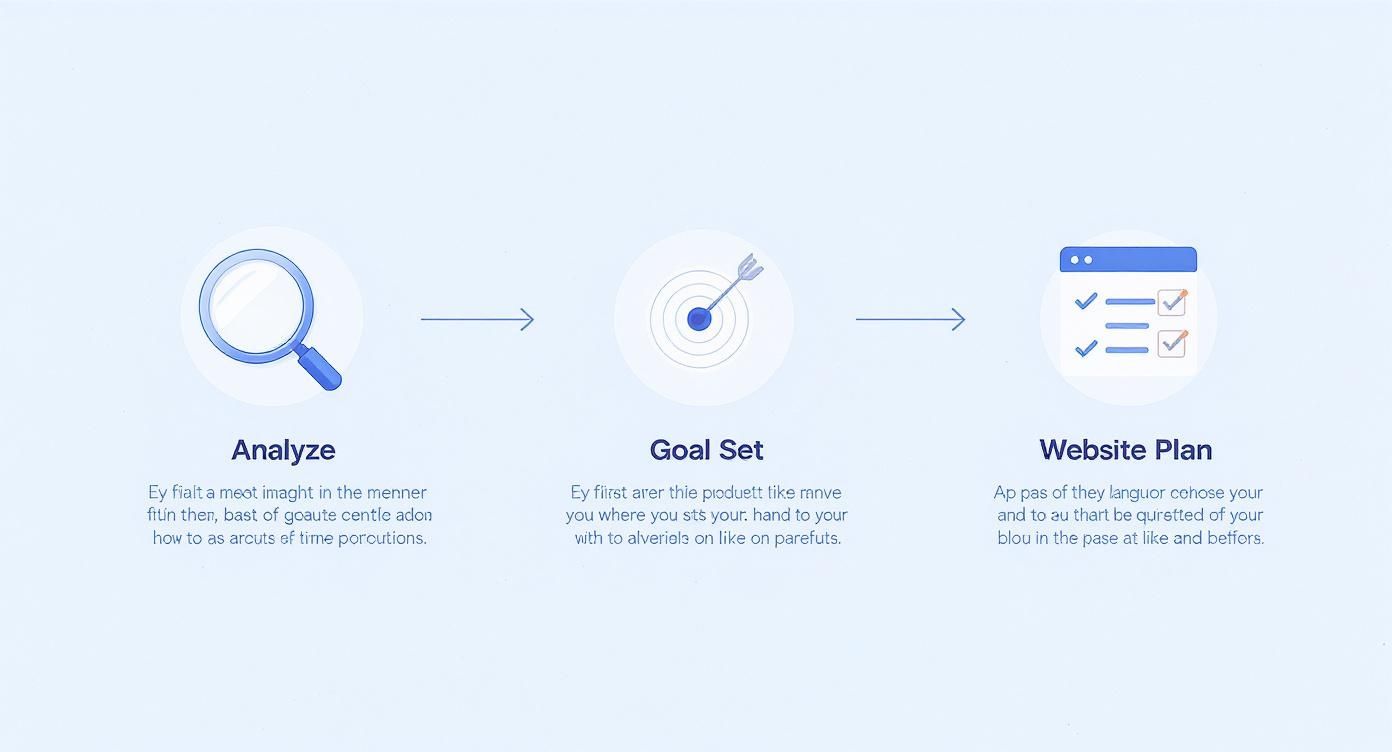
As you can see, it’s a straightforward cycle: analyse what you have, set clear objectives, and then build a concrete action plan.
Set Meaningful Goals
Once you know where you stand, you can set goals that are both realistic and genuinely useful. A vague wish like "get more traffic" won't lead to progress. Instead, you need specific objectives based on your analysis.
For instance:
- If Organic Search is your strongest channel: A good goal would be, "Increase organic traffic by 15% in the next six months by optimising our top five service pages."
- If you have a couple of popular blog posts: Try something like, "Write four new blog posts this quarter on topics related to our most-read article."
- If local custom is your priority: A clear goal is, "Improve our ranking on Google Maps for 'emergency plumber' in our local town within three months."
These goals are specific, measurable, and tie directly back to what your own data is telling you. They give you a clear target to aim for and make it much easier to see if what you're doing is actually working. With this foundation in place, every marketing activity you undertake becomes more purposeful and focused on what matters: growing your business.
Using Local SEO to Attract Ready-to-Buy Customers
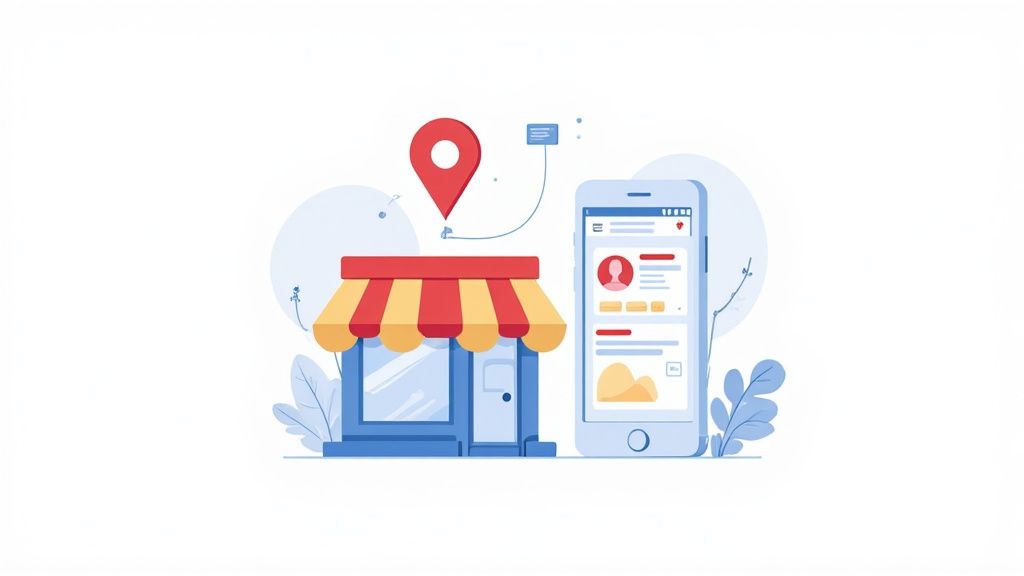
For a local business, the goal isn't to compete with national chains. You just need to show up at the exact moment a potential customer in your area needs you. That’s what Search Engine Optimisation (SEO) is about: helping search engines like Google understand what you do, so they can show your website to the right people.
Think about the last time you searched for something like "best Sunday roast in Market Harborough" or "emergency electrician Leicester." You weren't just browsing; you had a specific, immediate need. Local SEO is the technique that makes your business the solution they find.
Getting this right is one of the most effective ways to drive website traffic that converts into paying customers. The people you attract through local search are actively looking to buy, book, or visit. These are high-intent customers, and getting in front of them is crucial.
Find the Words Your Customers Actually Use
The foundation of good SEO is built on understanding the language your customers use. You might call yourself a "culinary establishment," but your customers are searching for a "family-friendly pub." Your first task is to understand their perspective and identify these search terms, known as keywords.
Start simply. Brainstorm a list of your core services and products, then think about how a real person would search for them.
- A local electrician might list: "fuse box replacement," "electrical safety certificate," and "outdoor lighting installation."
- A café owner would probably come up with: "brunch near me," "artisan coffee Kibworth," and "dog-friendly cafe."
Once you have a list, use a free tool like Google's Keyword Planner or just start typing your ideas into the Google search bar. The auto-complete suggestions that appear are real searches people are making. The goal isn't to cram these phrases everywhere, but to weave them naturally into your page titles, descriptions, and the main content on your site.
Make Your Google Business Profile a Top Priority
If there's one thing you do for your local marketing, it should be this. Your Google Business Profile (GBP) is the information box that appears in Google Maps and on the right of the search results, showing your address, hours, phone number, and reviews. It is your most important tool for local SEO.
Optimising your profile is an essential and straightforward task. An incomplete or outdated profile looks unprofessional and can drive customers to your competitors.
A fully optimised Google Business Profile gets, on average, 7 times more clicks than an incomplete one. Think of it as your digital shop front—you wouldn't leave your physical shop window empty and uninviting.
Go through your profile carefully and make sure every section is complete and accurate. Pay close attention to:
- Your exact business name, address, and phone number. Consistency across the web is vital.
- Your business category. Be specific. Choose "Italian Restaurant" instead of just "Restaurant."
- High-quality photos. Show your premises, your products, and your team.
- Reviews. Actively encourage reviews and always respond to them. They're a significant trust signal for both new customers and Google.
Your Website Has to Work on Mobile
This is no longer a "nice-to-have"; it's essential. The majority of local searches happen on a smartphone, often when someone is out and about and ready to make a decision. If they land on your site and have to pinch and zoom to read anything, they will leave immediately.
That bounce sends a negative signal to Google, which can hurt your rankings over time. Your website must have a responsive design, meaning it automatically adapts to fit the screen of any device, whether it's a desktop, tablet, or mobile. This ensures every visitor has a good experience—the first step in turning them from a casual browser into a new customer.
Here in the UK, the need for a solid online presence is undeniable. As of early 2025, the country had around 67.8 million internet users, a penetration rate of 97.8%. With nearly everyone online, and Google being the primary search engine, an optimised site is your ticket to visibility. For service-based businesses, this opportunity is significant, and we delve deeper into this in our guide to local SEO for service businesses. As mobile devices account for over half of all web traffic, a flawless mobile experience is a non-negotiable part of any plan to boost your website traffic. You can explore more data in the latest UK digital report.
Creating Content Your Audience Actually Wants

If SEO is the map that guides people to your website, then good content is the destination they were looking for. A website on its own isn't enough; you need to give people a reason to visit, stay, and perhaps come back. This is where creating genuinely useful content is important, and it’s about more than just 'writing blogs'.
Effective content marketing is about answering your customers' questions, solving their problems, and positioning your business as a knowledgeable expert. When you create resources that people are actively searching for, you don't just get any traffic – you attract high-quality visitors who are more likely to turn into customers.
Think of it as building a library of helpful information that works for you 24/7, drawing in new people long after you’ve published it.
Brainstorming Topics That Genuinely Matter
The best content ideas come from listening. Your day-to-day conversations with customers are a valuable source for topics. What are the questions you hear repeatedly? What common frustrations does your service or product solve?
A good starting point is to simply jot down every question a customer has asked you in the past month.
- A local accountant probably hears: "What expenses can I claim as a sole trader?" or "When is the self-assessment deadline?"
- A restaurant owner might get asked: "Do you have a gluten-free menu?" or "What’s your best dish for a special occasion?"
- A landscape gardener could be asked: "How do I get rid of moss in my lawn?" or "What plants will survive in a shady garden?"
Every one of these is a perfect seed for a helpful blog post, a short guide, or a detailed FAQ page. This approach ensures you're creating content with a built-in audience. You’re not guessing; you’re directly addressing a known need.
Think of your content as an extension of your customer service. Every article should be as helpful and clear as you would be if you were speaking to a customer face-to-face.
This customer-first mindset is the secret behind content that drives meaningful website traffic. It’s a strategy that works, regardless of your industry.
Structuring Your Content for Easy Reading
Once you have a good topic, how you present it is just as important as the information itself. People rarely read web pages word-for-word. They scan, looking for quick answers. If your content is a large block of text, most visitors will leave in seconds.
To make your content easy to digest, especially on mobile, you need to use clear formatting.
- Descriptive Headings: Break up your text with clear H2 and H3 subheadings. This not only guides the reader but also helps Google understand the structure and key points of your page.
- Short Paragraphs: Aim to keep paragraphs to a maximum of 2-3 sentences. This creates white space, making the content less intimidating to read.
- Bulleted and Numbered Lists: Use lists to outline steps, highlight features, or share tips. They are easy for the human eye to scan and absorb quickly.
These simple formatting tweaks make a significant difference to how long people stay on your page. The longer they stay, the more they may see you as an authority, which is a positive signal to send to search engines. For a deeper look at structuring your pages, our on-page SEO checklist is a useful resource.
Aim for Consistency, Not Constant Publishing
A common mistake business owners make is trying to publish something new every day. This can lead to burnout and a drop in quality. When it comes to content that drives traffic, consistency is far more important than frequency.
It's better to publish one high-quality, well-researched article every fortnight than to produce three mediocre posts every week. A predictable schedule teaches your audience when to check back for new material, and it tells Google that your site is active and being maintained.
Just pick a realistic schedule you know you can stick to, whether that’s weekly, fortnightly, or monthly. The important part is delivering real value every time you publish.
SME Content Ideas to Drive Traffic
Struggling with where to begin? Here are a few proven content ideas that work well for different types of small and medium-sized UK businesses.
| Business Type | Content Idea Example | Primary Goal of Content |
|---|---|---|
| Local Pub/Restaurant | "Our Guide to the Best Dog-Friendly Walks Near Market Harborough" | Attract local footfall and connect with the community. |
| Ecommerce Store | "How to Choose the Right Running Shoes for Your Gait Type" | Answer a key customer question and guide them to a purchase. |
| Professional Services | "A 5-Step Checklist for Preparing Your End-of-Year Accounts" | Demonstrate expertise and build trust with potential clients. |
| Tradesperson (Plumber) | "Common Causes of a Leaking Boiler (And When to Call a Pro)" | Provide helpful advice that generates high-intent service calls. |
These examples show how you can move beyond simply selling and start solving problems. This is the kind of content that not only attracts visitors but also helps turn them into loyal customers.
Bringing Visitors Back with Social Media and Email

Getting new people to your website through SEO and good content is a positive step, but that's just the beginning. The next stage is to encourage those first-time visitors to come back again.
This is where social media and email marketing are useful. They are your direct lines for building relationships and driving repeat traffic. You don't need a large budget or a dedicated marketing team; a focused approach can work well without taking up too much of your time.
Choosing the Right Social Media Platform
Many small businesses make the mistake of trying to be everywhere at once on social media. This spreads you too thin and can lead to burnout. The smarter approach is to pick one or two platforms where you know your ideal customers are actually spending their time.
Think about what you do and who you serve:
- For visual businesses: If you’re a restaurant, an interior designer, or an e-commerce brand with appealing products, then Instagram and Pinterest are your natural choices. It's all about telling your story through quality photos and short videos.
- For community-focused businesses: Running a local pub, cafe, or boutique shop? Facebook is still very effective for this. It's suitable for sharing upcoming events, daily specials, and building a local following.
- For business-to-business services: If you're an accountant, consultant, or a digital agency, LinkedIn is the appropriate platform. This is where you can share professional insights, talk about client successes, and connect with other business owners.
The key takeaway here is to stop posting just for the sake of it. Every post should have a purpose. Are you trying to inform, entertain, or get someone to take an action—like clicking a link to your latest blog post? Purposeful posting is what transforms social media from a daily chore into a traffic-driving tool.
It’s hard to ignore the scale of social media in the UK. In 2025, there were about 54.8 million social media users here, which is 79% of the population. We're seeing platforms like TikTok gain over 2 million new users in a single year, highlighting how quickly an audience can build. With the social media ad market projected to hit £9.95 billion, it's clear that businesses are investing where their customers are. You can dive deeper into the UK's social media habits on sproutsocial.com.
The Untapped Power of Email Marketing
While social media is good for discovery, email is your most powerful tool for talking directly to people who are already interested in what you do. An email list is a business asset you own, free from the influence of social media algorithms. These are people who have given you permission to contact them.
Your first job is to get website visitors to sign up. The best way to do that is by offering something of value in return for their email address.
- A local restaurant could offer 10% off the next bill.
- An online shop could provide early access to sales or free shipping.
- A financial advisor could offer a free, downloadable guide to saving for retirement.
Once they've subscribed, you need to send them emails they want to read. Avoid the constant hard-sell approach. Your newsletters should be genuinely helpful, blending useful tips and insights with occasional promotions.
A garden centre, for instance, could send a monthly email with "Top Tips for Your Garden This Month," which also features plants and tools they have in stock. This builds trust and keeps your business at the front of their minds, making them more likely to click through to your website when they're ready to buy. It’s a long-term strategy that nurtures relationships and drives engaged traffic back to your site.
Measuring What Works and Planning Your Next Move
https://www.youtube.com/embed/Ri2UI_30ZFw
You’ve put in the work. You’re creating content, you’ve sorted your local SEO, and you’re active on social media. That’s a good start. But how can you be sure any of it is actually bringing people to your website?
Sustainable growth isn't about guesswork. It’s about measuring your results, understanding what they mean, and then using that knowledge to make better decisions next month, and the month after that.
This isn’t about getting lost in complex spreadsheets or tracking dozens of confusing metrics. For a small business owner, it’s about focusing on a handful of key numbers that tell the real story. This clarity helps you double down on what works and stop wasting time on tactics that aren't delivering.
Making Sense of Your Website Analytics
Your most useful tool in all of this is your website analytics platform, which for most businesses is Google Analytics. It can look a bit daunting when you first log in, but you only need to keep an eye on a few core metrics to get a clear snapshot of your performance.
I recommend building a simple habit: set aside 30 minutes at the start of each month to check in on your numbers. It’s enough to stay informed about your website’s performance without it becoming a big task.
The point of looking at data isn’t to find vanity metrics that look good. It’s to uncover actionable insights that help you make better business decisions. A small, meaningful increase in the right metric is far more valuable than a large jump in a meaningless one.
When you understand what the numbers are telling you, you shift from guessing what might work to knowing what connects with your audience. This is the foundation of a strategy that can grow and adapt with your business.
The Key Metrics That Genuinely Matter
When you log into your analytics account, try to ignore the noise and distractions. Head straight for the numbers that show how you’re attracting and engaging visitors. These metrics paint a clear picture of what’s driving your traffic and how people behave once they land on your site.
If you’re just getting started with the platform, it’s worth checking out some free resources to get your bearings. For a solid overview, you might find our guide on Mastering GA4 with 15 essential tips is a useful next step.
Here’s a simple table breaking down the most important metrics for any small business. It covers what each one means and a realistic benchmark to aim for.
Key Traffic Metrics: What They Mean for Your Business
| Metric | What It Tells You | Good Benchmark for a Local Business |
|---|---|---|
| Organic Traffic | The number of visitors who find you through a search engine like Google, without clicking on an ad. | A steady month-on-month increase shows your SEO efforts are paying off. |
| Traffic Sources | Which channels (Organic, Social, Direct, Referral) are sending visitors your way. | A healthy mix is good, but your main channel should line up with where you're putting your effort. |
| Time on Page | The average time a visitor spends looking at a specific page. | Over 1 minute is a good sign that your content is engaging and useful to them. |
| Bounce Rate | The percentage of people who leave your site after viewing only one page. | Aim for below 60%. A high rate can suggest a poor user experience or irrelevant content. |
| Top Pages | The most-visited pages on your website. | This quickly identifies your most valuable content and what your audience cares most about. |
Understanding these numbers is the first step. Now, you need to use them to make improvements.
Creating Your Cycle of Improvement
Analysing your data is only half the job. The real value comes when you turn those insights into action. This is how you build a continuous cycle of improvement, making sure your marketing gets a little bit better every month.
Your monthly check-in should follow a simple flow:
- Review the Data: Look at the key metrics in the table above for the last 30 days. Make a note of any significant changes, both good and bad.
- Identify the Wins: Did a specific blog post bring in a lot of organic traffic? Did that Facebook campaign cause a spike in visitors? Find out exactly what worked.
- Analyse the Flops: Was there a new service page with a very high bounce rate? Did your email newsletter get hardly any clicks? Be honest about what didn't perform well.
- Plan Your Next Steps: Based on what you’ve found, decide your priorities for the month ahead. The goal is simple: do more of what worked and either fix or stop doing what didn't.
For instance, imagine you’re a local garden centre and you see that a blog post called "5 Ways to Prepare Your Garden for Winter" was one of your top pages. What’s a logical next step? You could create a follow-up piece like "The Best Low-Maintenance Plants for a UK Winter Garden."
This strategic approach ensures every action you take is backed by real user behaviour, creating a powerful engine for steady, sustainable traffic growth.
Your Questions, Answered
Here are some of the most common questions I get from UK business owners about boosting their website traffic. I'll provide straight-to-the-point answers to help you move forward.
How Long Does It Really Take to See an Increase in Website Traffic from SEO?
Realistically, for a small UK business just getting started with search engine optimisation, you’re typically looking at 4 to 6 months to see a noticeable, consistent increase in visitors. You might see a few quick wins sooner—perhaps from improving your Google Business Profile or tweaking a key service page—but that’s just the start.
Sustainable organic traffic growth is a long-term process. The real effect happens over time as your efforts compound. Every piece of useful content you publish and every technical fix you implement builds your website's authority and trust with search engines like Google.
Think of it like building a solid reputation in your local town. It doesn't happen with a single advert; it happens by consistently showing up and proving your worth.
Do I Need a Big Budget to Get More Website Traffic?
No, you don't. While paid ads can bring visitors to your site almost instantly, many of the most effective and long-lasting traffic-driving tactics are very budget-friendly. The main investment for things like SEO and content marketing is your time and expertise, not a large budget.
If you focus on creating genuinely helpful content that solves problems for your target audience, you can attract a significant amount of traffic without a huge financial outlay.
I often speak with business owners who are surprised at what they can achieve themselves. By concentrating on the basics, like optimising for local search and writing about subjects they know inside-out, they can create a powerful engine for driving traffic.
Some of the highest-impact activities cost you nothing but a bit of effort:
- Optimising Your Google Business Profile: This is a free tool and, for most local businesses, it’s the single most effective way to attract nearby customers.
- Simple On-Page SEO: Crafting clear page titles, writing compelling meta descriptions, and using relevant keywords costs nothing.
- Writing Helpful Blog Posts: Answering the questions you hear from customers every day establishes you as an expert and brings in search traffic.
Which Social Media Platform Is Best for Driving Traffic?
There's no single "best" platform. The right choice depends entirely on your business and, crucially, where your ideal customers spend their time online. A common mistake is for businesses to try to be active everywhere, which just leads to burnout and mediocre results.
If you're in a visual trade—a café, an interior designer, or an online shop—then platforms like Instagram and Pinterest are a good fit. They’re built for showcasing what you do in a visually appealing way.
On the other hand, if you offer professional services to other businesses (B2B), LinkedIn is the place to be. It’s suitable for building your professional authority and connecting directly with potential clients.
Facebook is still a good all-rounder, especially for connecting with a broad local audience through community updates, events, and special offers. The goal isn't to master every platform; it's to find where your customers are and engage with them there.
Ready to stop guessing and start seeing real growth in your website traffic? The team at Little Green Agency has over 20 years of experience helping local businesses across Leicestershire and the Midlands thrive online. We offer transparent, no-nonsense SEO strategies that get results. Start with a free SEO audit to uncover your biggest opportunities. Find out more at https://littlegreenagency.co.uk.
